Building a Stone Walkway
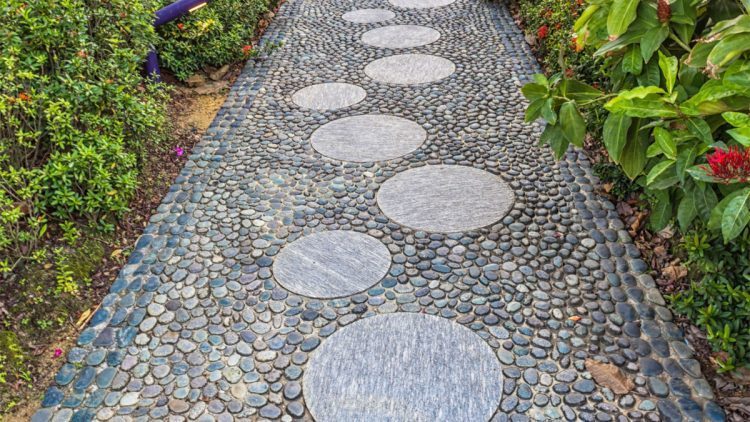
Stone and garden walkways add an unrefined allure to any landscape, including those with a cottage-like garden design. Whereas many stone walkways utilize mortar, which requires a base and a little rock work knowledge, a stone walkway is simpler and perfect for DIY setup. This method entails placing stones on a base of sand, guaranteeing stability and simplicity of leveling. After set, fill in the gaps with gravel, sand, or durable plants to complete your walkway.
Choose Your Stone
Choosing stones for a walkway is mostly a matter of preference, as any rounded stones will suffice. A lot of walkways are created with flagstone, defining the shape of stone instead of a particular type of rock. It’s typically best to choose the type that is available locally, as this is going to keep the cost down, both for the rock and its delivery. A lot of flagstone that is 2 to 3 inches thick is perfect for walkways.
Lay Out Your Walkway
Lay out the path of the walkway, using wooden stakes and string (for straight walkways) or two garden hoses (for curving walkways). If the walkway is going to be used for frequent traffic, like a walkway between a driveway and an entryway, be sure it is wide enough for two people to pass by each other with ease. A small garden walkway or those leading to hidden retreat in your landscape can be sized for one individual. Lay out strings or hoses on each side of the walkway.
Excavate the Path
Use a sod cutter or garden spade for cutting along the path marked by your strings or hoses. Take out all grass and their roots, then dig downward around 5 inches for a smooth base to build off of. Compact the soil firmly with a compacter or simply by repeatedly walking over the walkway.
Install Edging (optional)
Install edging materials along both sides of the path, if you choose, adhering to the manufacturer’s guidelines. You can use a lot of different kinds of edging, like galvanized steel, synthetic brick, or pressure-treated wood. If you don’t use edging, the grass or soil edges along the path is going to help keep your stones in place.
Apply Landscaping Fabric
Lay landscaping fabric over the ground along the whole path. Try using a continuous piece as much as you can. If you need to use several pieces, overlap their edges with at least a foot. Trim the landscaping fabric along the sides of your walkway using a utility knife and secure the fabric to the ground with landscaping fabric staples.
Add a Sand Layer
Pour two inches of sand over the landscaping fabric. Smooth the sand out so it is even and level, using a 2×4 board that is a little smaller than the width of your walkway.
Lay Out the Stones
Lay out your walkway stones to the left or right side of your walkway so all of them are able to be seen. The notion is to see the shape and size of each stone so you can select and choose the ideal fit as you lay out your walkway.
Install the Stones
Start by placing stones onto the sand base of the walkway, adjusting them together as you wish. Leave small gaps between the stones if you are going to fill the gaps with gravel or sand; leave wider gaps (around 2 inches) if you are going to plant between the stones. Placing each stone so it is steady (without “seesawing”) and is level with the nearby stones. Utilize a carpenter’s level leveling each stone and level across to other stones as you work down your walkway. Make adjustments to the sand underneath each stone for perfect leveling. Use differing shapes and sizes for a natural appearance.
Fill the Gaps
Add sand or gravel for filling in the gaps between the stones, as you wish. Spread the sand using a brush, spray your walkway down with water to settle the sand, then fill the gaps once more, repeating until they are filled. If you’re going to plant in the walkway, fill the gaps in the stones with a garden soil mixture, then add “stepable” plants, like creeping thyme, stonecrop, or blue star creeper.
Landscaping Materials Phoenix by A&A Materials, Inc.
A & A Materials, Inc., located in Scottsdale, Arizona, offers Landscaping Materials for your landscaping needs. Call us at 480-990-0557 for more information.